A specimen paper, with the drawing.
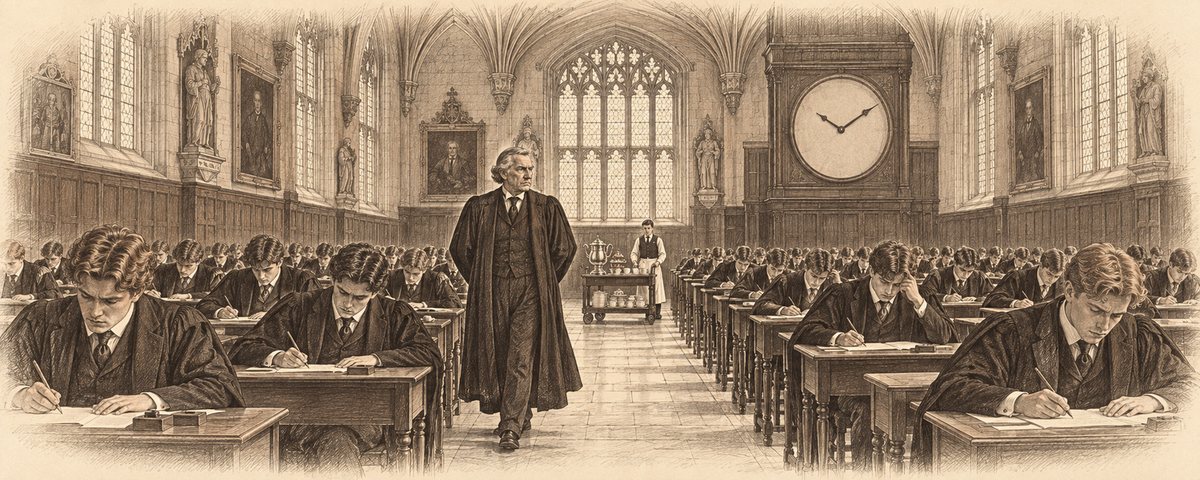
The KEAT is sat by every applicant: two hours of mathematics, mechanics and one drawing of an object whose purpose becomes apparent approximately forty minutes too late. This specimen is published so that nobody can say they were not warned.
Calculators are permitted where they continue to work after the Wi-Fi is turned off.
Tea is served at the one-hour mark. Candidates should not regard this as a hint, although in Section B it is one.
Except where the question is older than the metre, in which case candidates convert, and are marked on whether they noticed.
Answer all questions. Show your working; the examiners have been shown other people’s.
A penalty shoot-out ends and the grid sees a step of 2,800 MW. Taking a kettle as 3 kW, how many kettles is that, to the nearest thousand? State one assumption you have made about the British public.
The highest published figure for the attackers at Rorke’s Drift is 4,500 and the lowest for the defenders is 139. (a) Give the odds to the nearest whole number. (b) A newspaper says “forty to one”. How many of the 139 defenders would have had to be absent for the newspaper to be right?
A wall a hundred yards round is built of bags three feet long, laid in four courses. Each bag weighs 200 lb. (a) How many bags? (b) What do they weigh, in long tons? (c) The Bursar approved twelve. Express this as a percentage.
The College was established in 978 (ish). Taking “ish” as plus or minus fifteen years, give the range of the College’s possible ages in 2026, and explain why the Registry celebrates the anniversary every year.
Take g as 9.81 m/s². Neglect air resistance and the Clerk of Works.
A trebuchet on level ground releases a bag at 45° to the horizontal, and the bag lands forty yards away (36.6 m). Find the speed of release. Comment on the fact that all three bags thrown in the Department’s trial fell short.
A plank footbridge of span 4 m is simply supported at its ends. A Fellow of mass 90 kg stands at mid-span. (a) Find the reaction at each support. (b) Find the greatest bending moment. (c) A duck of mass 1.2 kg joins him. The bridge has a factor of safety of forty. Are you concerned?
One question. Candidates are advised to read it twice and to begin it early.
Figure 1 shows an object in front elevation, side elevation and plan. (a) State its purpose. (b) State the purpose of the bell. (c) It is now forty minutes since you answered part (a). Revise your answer to part (a).
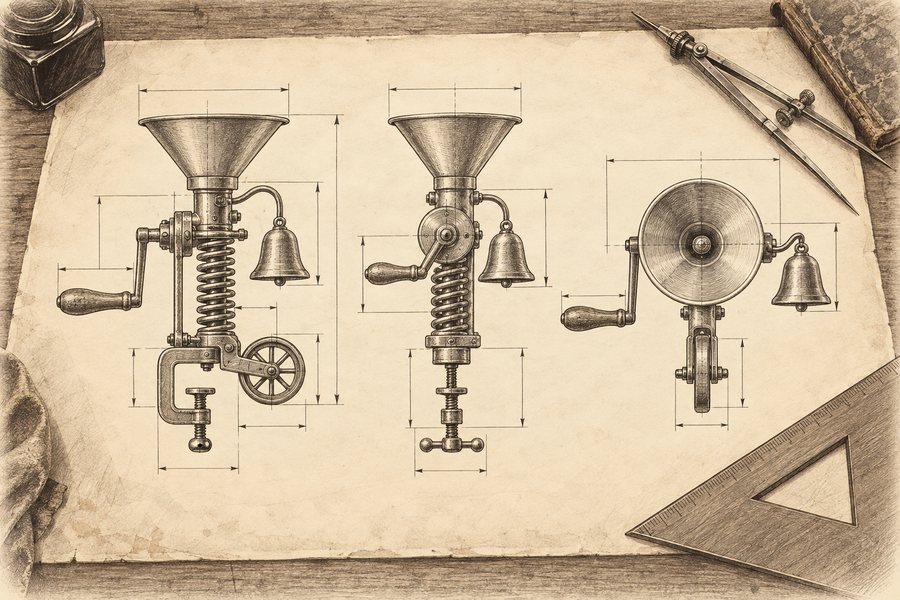
Figure 1. Not to scale, or to any purpose yet established.
The arithmetic is real and so are the answers. Three of the questions are taken from the College’s own papers, where the working is shown in full.
The synchronised boiling thesis → · Rorke’s Drift and Jadotville →
| Question | Answer |
|---|---|
| A1 | 2,800,000 ÷ 3 = 933,333, so 933,000 kettles. Assumption: that they all switched on at once. They did. |
| A2 | (a) 4,500 ÷ 139 = 32.4, so 32 to one. (b) Forty to one needs 4,500 ÷ 40 = 112.5, so no more than 112 defenders: 27 absent. Nobody claims this. |
| A3 | (a) 300 ft ÷ 3 ft = 100 bags a course; four courses, 400 bags. (b) 80,000 lb ÷ 2,240 = 35.7 tons. (c) 3 per cent. |
| A4 | 1,033 to 1,063 years. To be safe. |
| B1 | Range = v²/g at 45°, so v = √(36.6 × 9.81) = 18.9 m/s. Comment: the bags were added to the wall, which is the only fortification in the literature to have been reinforced by the enemy. |
| B2 | (a) 90 × 9.81 = 883 N, so 441 N at each end. (b) WL/4 = 883 N·m. (c) No. Full marks for “no”; one mark deducted for any calculation. |
| C1 | The examiners accept any purpose argued from the drawing. No candidate has yet given the same answer to (a) and (c), and the Department regards the difference between them as the most reliable measure of an engineer it has. |